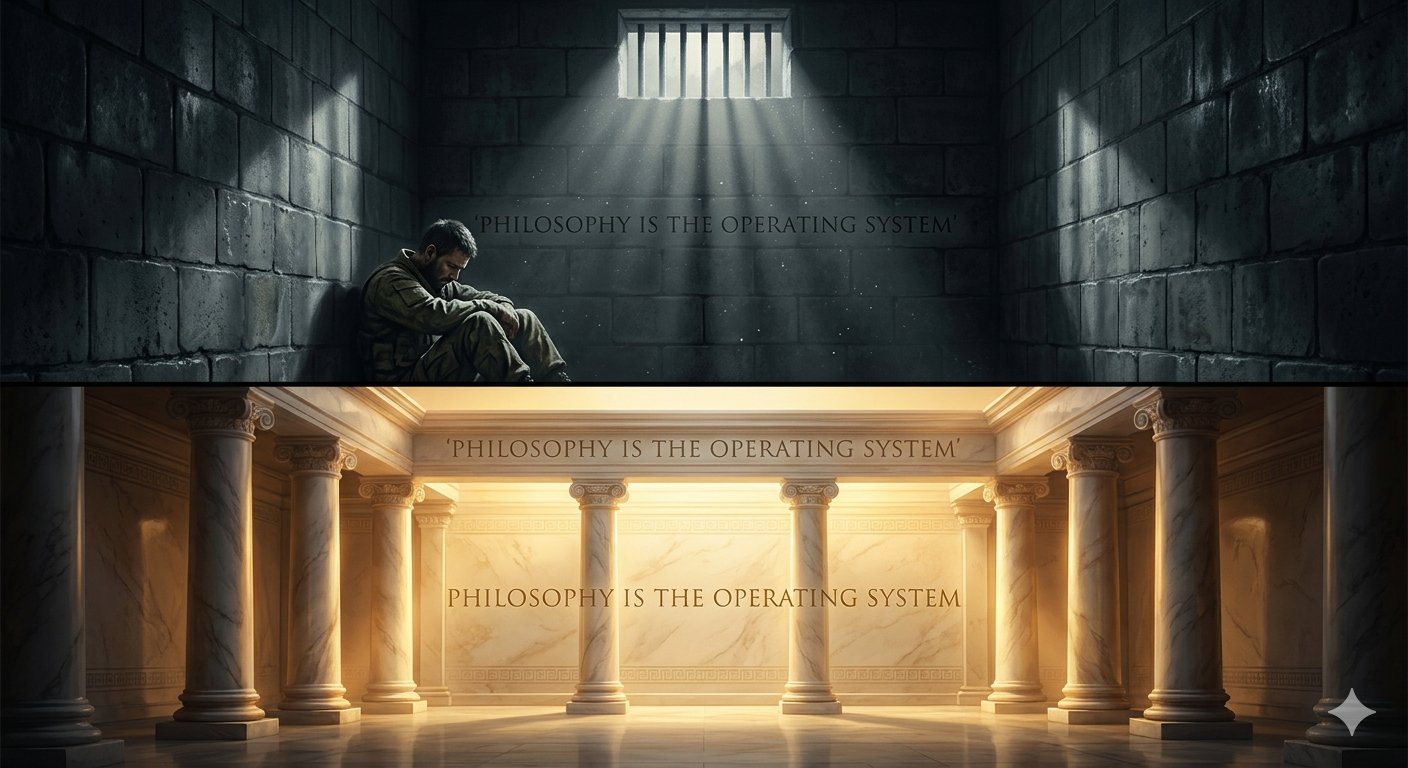
An individual's core philosophy determines their mindset because philosophy functions as the cognitive operating system of the human mind.
A mindset operates as the immediate collection of assumptions, filters, and attitudes through which a person views daily reality. Philosophy is the foundational source code that writes those filters. Every daily reaction, emotional trigger, and behavioral habit is merely the surface-level symptom of a deeply held philosophical premise. When someone consciously adopts or unconsciously inherits a philosophy, they establish the rigid boundaries of what they believe is possible, valuable, and true.
To understand how human behavior is engineered, one must examine the specific branches of philosophy that quietly dictate daily psychology.
We often treat mindset as a standalone psychological toolkit. Yet, psychological transformations frequently stall because they treat the symptoms rather than the cause. An individual's core philosophy determines their mindset because philosophy functions as the cognitive operating system of the human mind.
While a mindset operates as the immediate collection of assumptions, filters, and attitudes through which a person views daily reality, philosophy is the foundational source code that writes those filters. Every daily reaction, emotional trigger, and behavioral habit is merely the surface-level symptom of a deeply held philosophical premise. When someone consciously adopts or unconsciously inherits a philosophy, they establish the rigid boundaries of what they believe is possible, valuable, and true.
To understand how human behavior is engineered, one must examine the specific branches of philosophy that quietly dictate daily psychology.
Epistemology is the branch of philosophy concerned with the nature and grounds of knowledge which directly shapes cognitive agility and learning capacity. How a person believes knowledge is acquired determines how they handle being wrong.
If an underlying philosophy leans toward absolute dogmatism, an individual believes truth is fixed and entirely known. This creates a rigid, defensive mindset that views new information as a threat, ultimately accelerating confirmation bias. If the philosophy leans toward radical skepticism, the individual believes certain knowledge is entirely impossible, which can paralyze intellectual pursuit.
Conversely, a balanced epistemological framework, such as fallibilism or pragmatic empiricism, fosters a genuine growth mindset. It trains the mind to treat current beliefs as working hypotheses, allowing a person to adapt to new evidence without suffering an identity crisis.
Metaphysics deals with the fundamental nature of reality and existence. It forces an implicit stance on whether the universe is a chaotic sequence of random events, a strictly determined machine, or a purposeful ecosystem. This position dictates an individual's psychological locus of control.
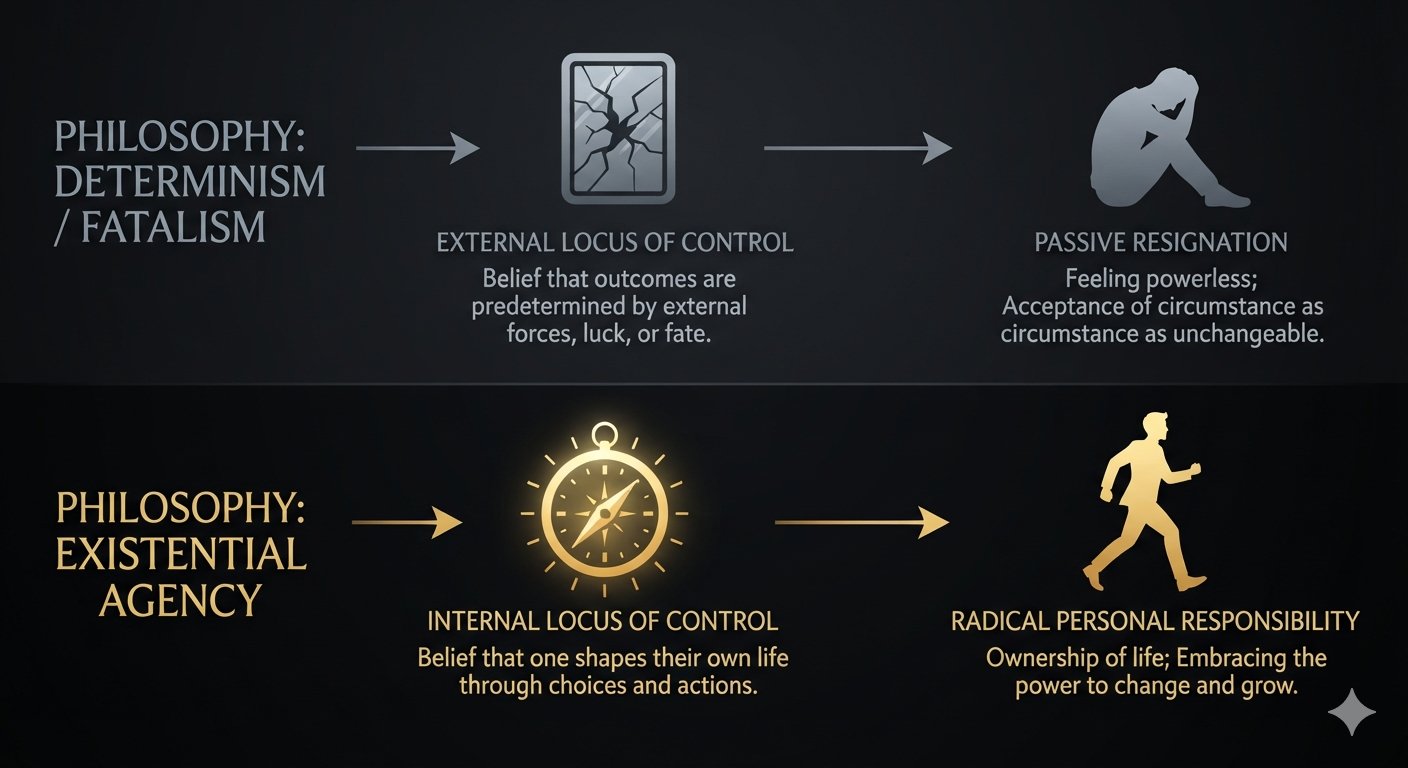
Believing in a purely deterministic universe breeds a fatalistic mindset, leaving the individual feeling like a passive bystander to fate. Embracing an existentialist or agency-driven metaphysics, however, builds a powerful internal locus of control. It forces the realization that regardless of external constraints, the individual retains the radical freedom to choose their response, transforming helplessness into proactive ownership.
Ethics is the philosophical study of moral values and conduct. It determines what constitutes a "good life" and establishes a person's hierarchy of values, which translates directly into their daily motivational framework.
A philosophy rooted in unbridled hedonism asserts that the ultimate good is the maximization of immediate pleasure and the avoidance of pain. This leaves an individual vulnerable to a fragile, short-sighted mindset driven by instant gratification and dopamine loops. And, a philosophy rooted in teleology or virtue ethics asserts that the good life is found in fulfilling one's potential and serving a higher purpose. This framework equips the individual with a resilient, long-term mindset. It anchors self-worth in internal character rather than external validation, turning discipline from a grueling chore into a natural expression of core values.
Teleology involves the explanation of phenomena by the purpose they serve. How an individual’s philosophy handles the concept of suffering and challenge fundamentally alters their emotional resilience.
Consider the sharp contrast between Nihilism (the belief that suffering is empty and meaningless) and Stoicism or various Eastern philosophies (which view suffering as an inevitability of nature and an opportunity for growth). A nihilistic view easily causes an individual to spiral into a victim mindset when setbacks occur. In contrast, a Stoic framework builds an "obstacle-is-the-way" mindset. It teaches the mind to instantly reframe adversity not as an interruption to life, but as the raw material out of which character and wisdom are forged.
In the end, no human being operates without a philosophy; those who claim to have none have simply absorbed one from their culture without filtering it.
To attempt to change a mindset without changing the underlying philosophy is like trying to change the temperature of a room while leaving the thermostat untouched. True, lasting psychological transformation requires diving beneath surface-level thoughts and consciously auditing the deep philosophical foundations that generate them.