Recognising one’s inherent intelligence is pivotal for “intentional living”. According to the wisdom of our ancient ancestors, life is a journey guided by two distinct streams of intelligence–fluid and crystallised intelligence. These streams flow through the course of an individual's existence, offering a simpler perspective compared to the intricate and specialised classifications found in modern fields such as psychology, cognitive psychology, developmental psychology, educational psychology, psychometrics, and cognitive neuroscience. Gardner's psychological framework, which outlines various human capabilities, initially recognised seven types of intelligence, such as linguistic, logical-mathematical, spatial, musical, bodily-kinaesthetic, interpersonal, and intrapersonal. Later, naturalistic intelligence, which pertains to the natural world, was included as an eighth category. Alongside these varied capacities, we can consider how intelligence works through both accumulated understanding and fresh encounters
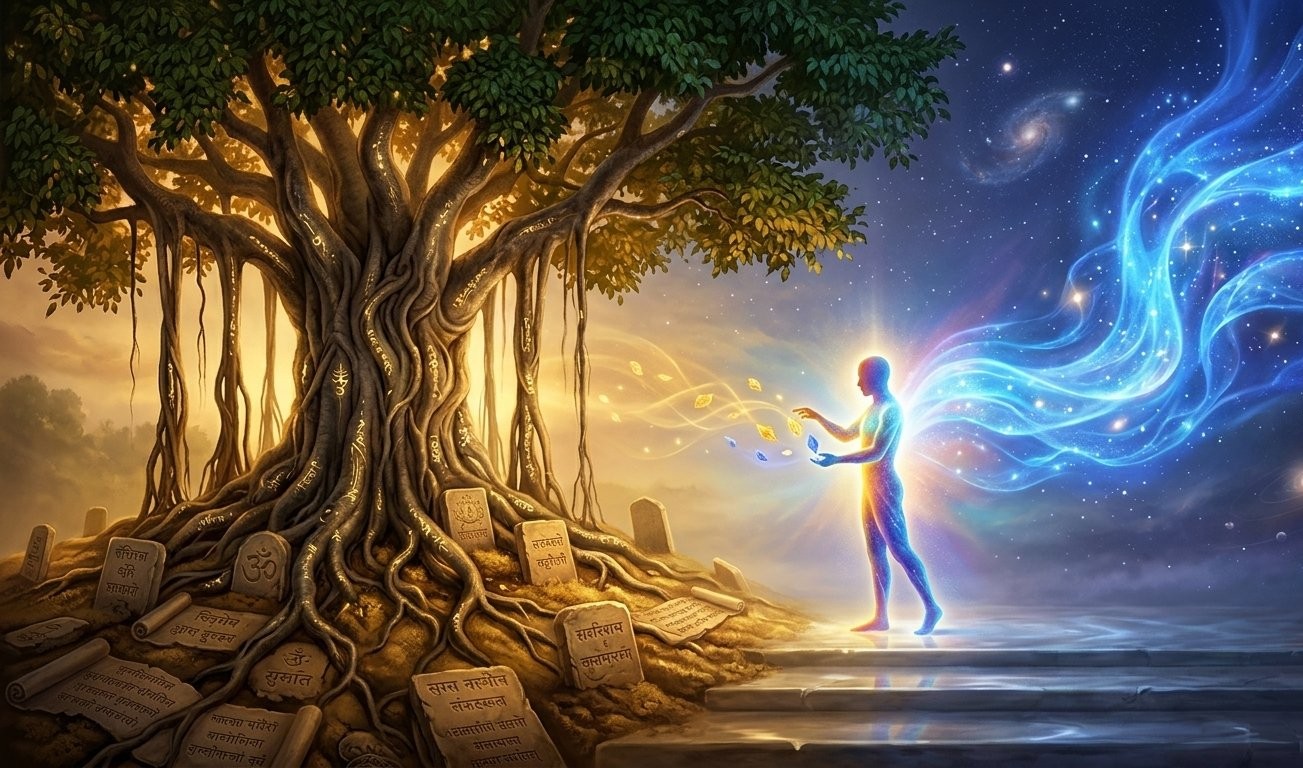
To walk purposefully through this world, one must first recognize the architecture of their own mind. Long before modern science drew complex maps of our psychological pathways, our ancestors recognized that life is guided by two beautifully distinct rivers of intelligence. They are the Crystallized (Smriti) and the Fluid (Pratibha)- two vital currents flowing from the rich landscape of our existence.
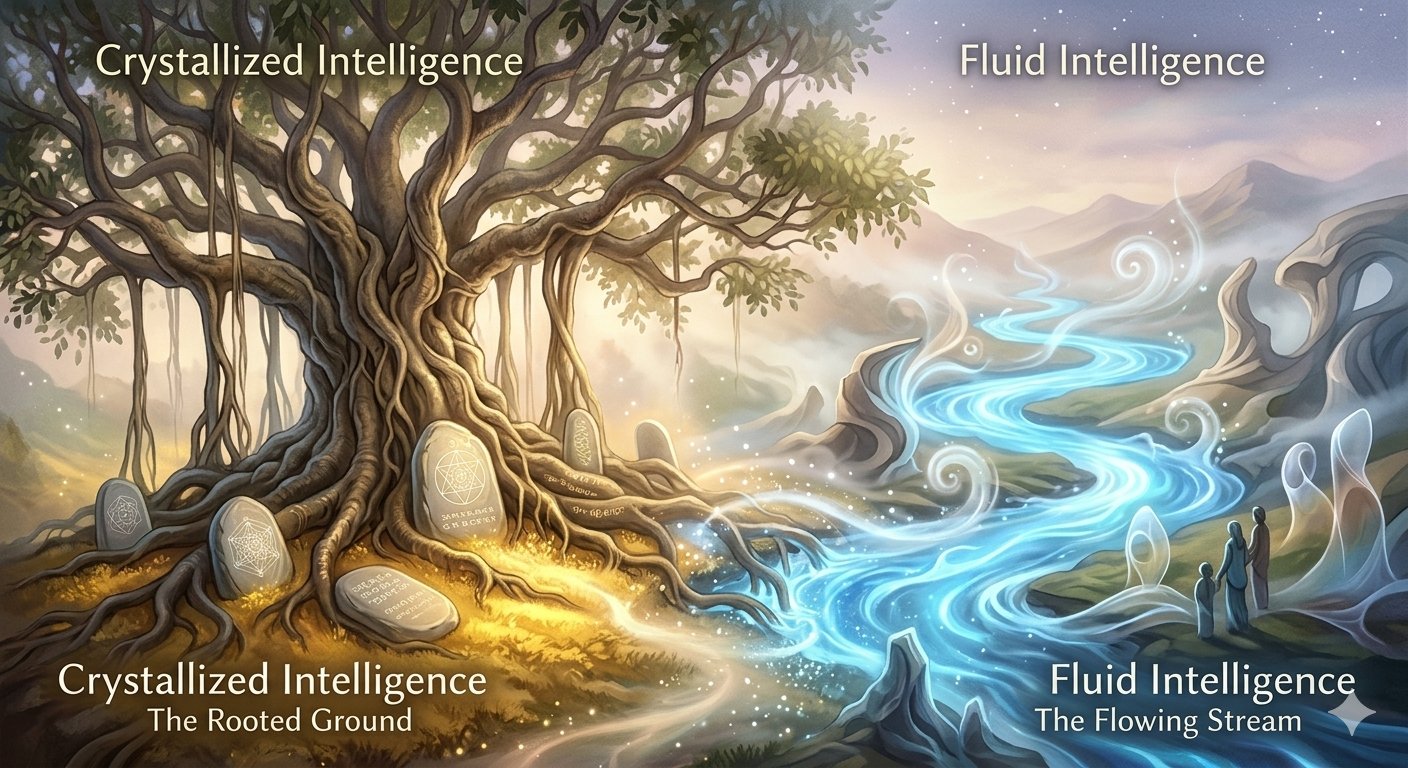
The ancestral tradition of Bharata honors these paths through a lens of profound clarity. Crystallized intelligence is our anchor- the ability to look at a challenge and answer it with the accumulated treasure of experience, memory, and learned skill. It is our foundation.
Yet, when we step past our thresholds and face the completely unmapped spaces of our lives, we call upon Fluid intelligence. Fluid intelligence is our common sense in its most lyrical form; it is the art of improvisation, a brilliant spark of adaptive logic that allows us to find relationships, build solutions, and hold space for answers when no precedent exists.
Every time we encounter the foreign, we do not arrive as empty vessels. We arrive as an explicit, beautiful culmination of our background. This is the truth of ethnocognition—the intimate, self-specific organization of how we notice, remember, interpret, and choose to act.
Ethnocognition grants us an essential "in-hereness." It is the unique signature of how our mind and body inhabit a fresh space through our personal history, cultural meanings, and available possibilities. When we meet an unfamiliar landscape, we naturally marry our history of learning with our raw capacity for immediate, flexible reasoning.
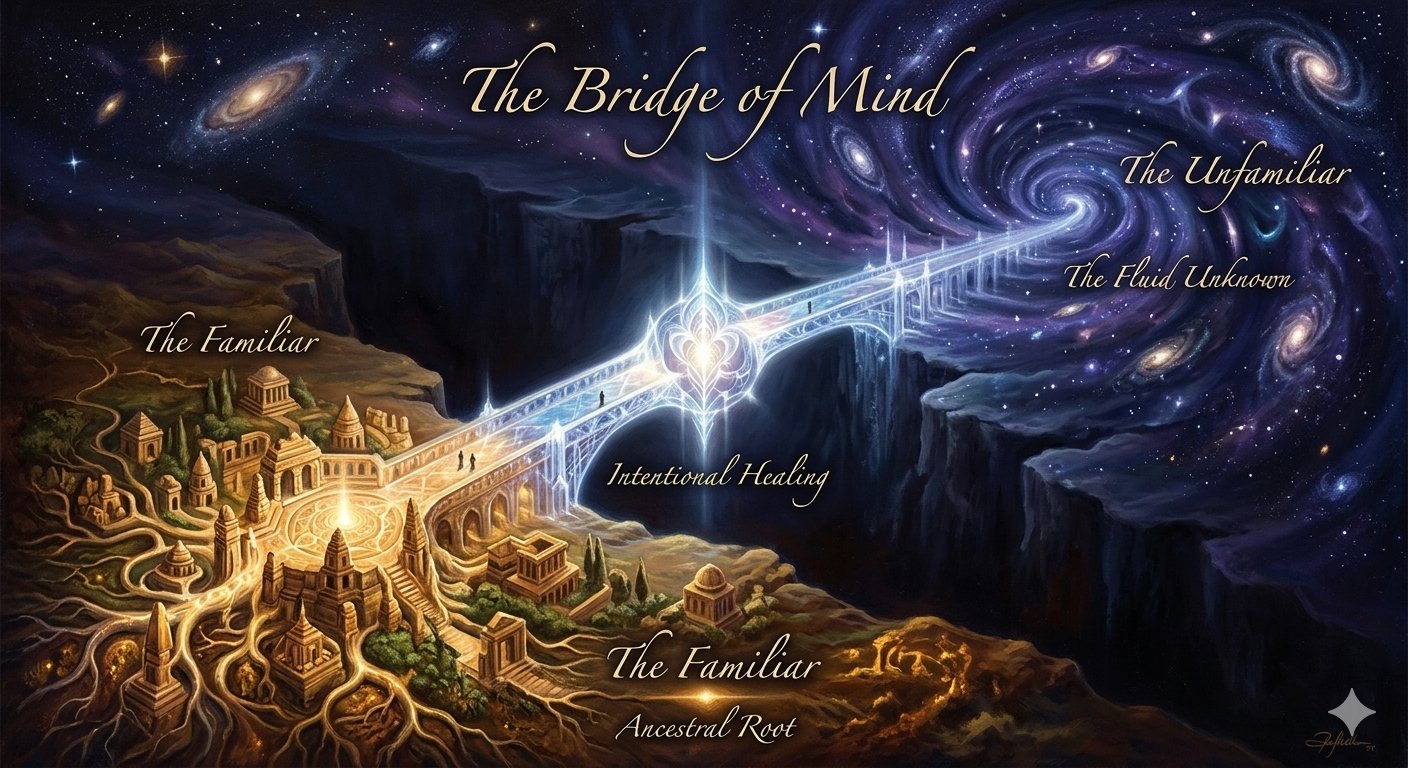
True, intentional living demands that we participate consciously at this very crossroads. Fluid intelligence allows us to navigate the open currents of a new day, and over time, that creative energy solidifies into the steady bedrock of crystallized wisdom.
This framework grants us an essential internal platform called "in-hereness" (Ātmabhāva), mirroring the classical philosophy of Sādhāraṇīkaraṇa, where our individual experiences are universally contextualized through common cultural meanings. When we meet an unfamiliar landscape, we naturally marry our structural history of learning with our raw capacity for immediate, flexible reasoning.
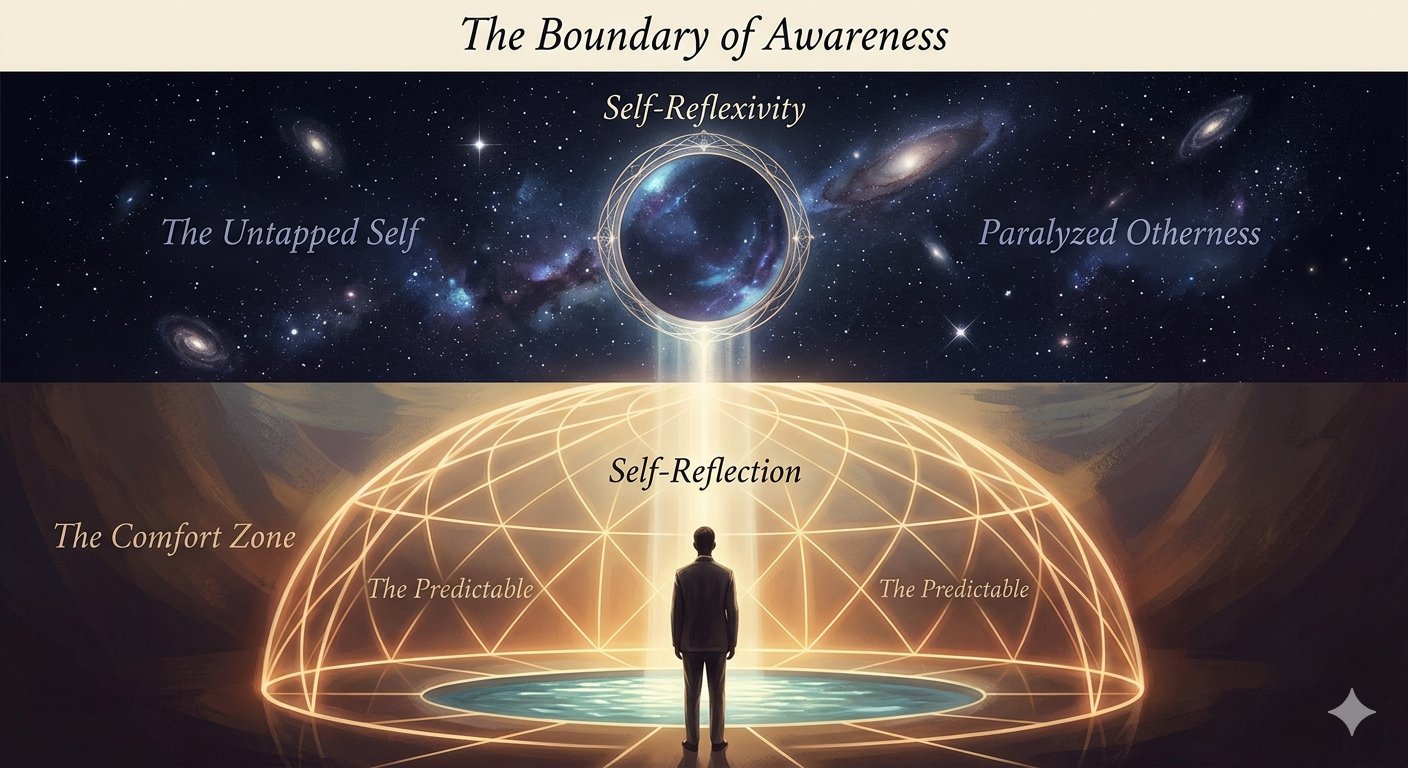
Learning is simply the bridge that updates our worldview, letting go of what is no longer true to make space for what is. Intentional Healing blooms here. By leaning into self-reflection, scrutinizing our default assumptions, and choosing our responses with an elegant, conscious weight, we rewrite ourselves from passive spectators into the true authors of our journeys.
*PM