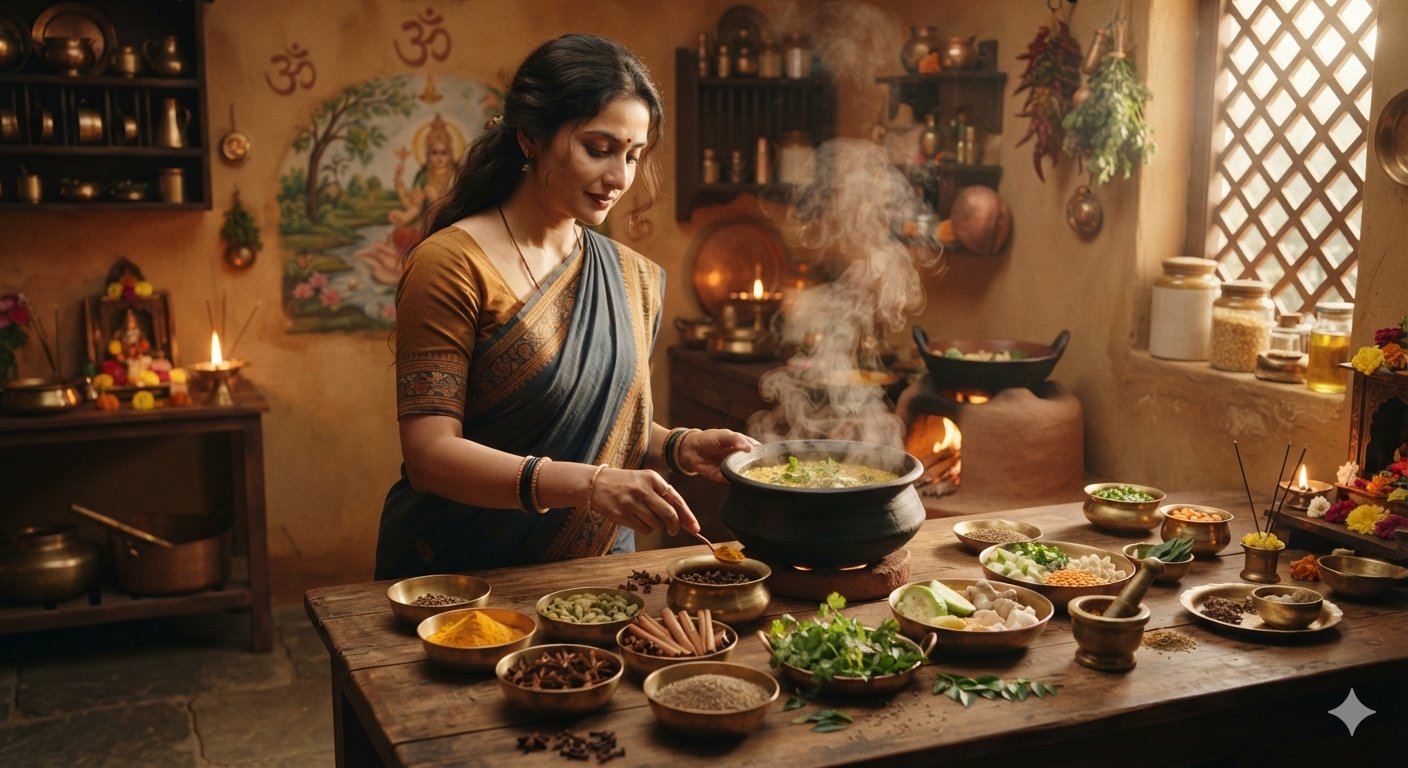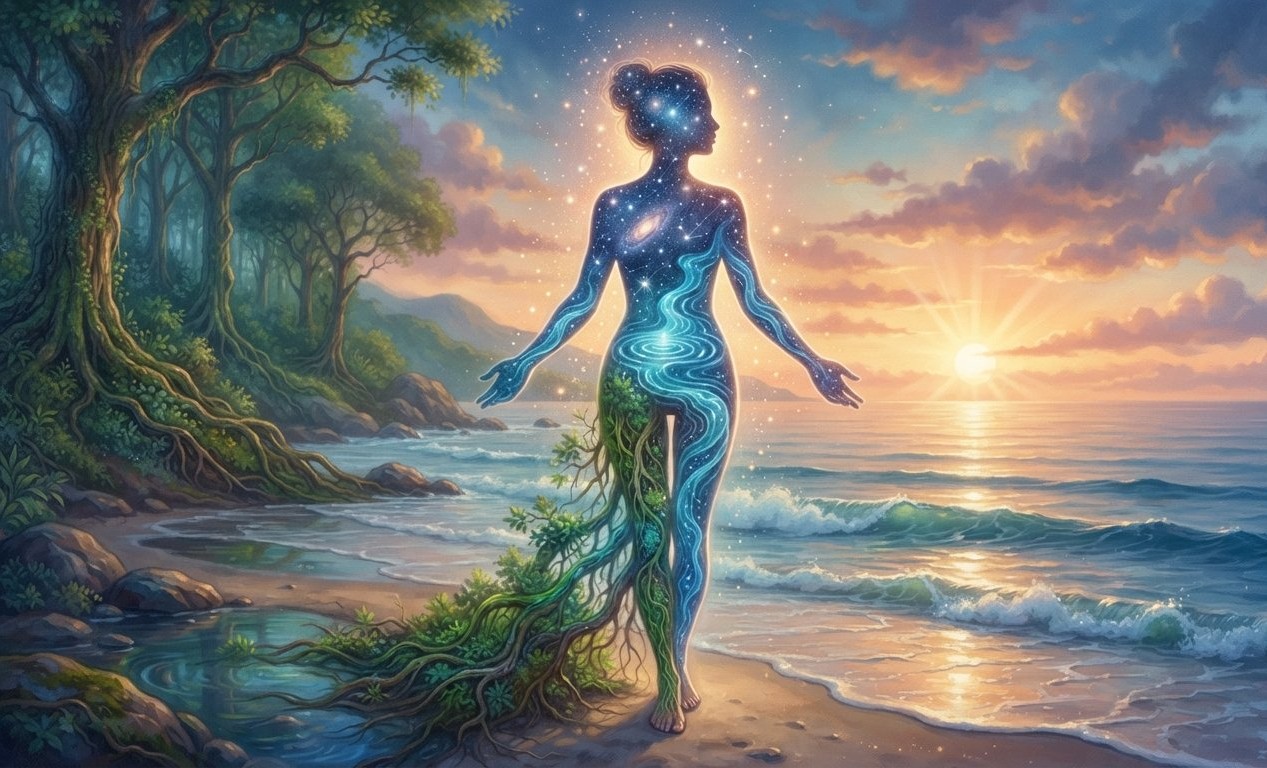
The ancient wisdom traditions of India weave a rich, luminous fabric of wellness-an intricate dance linking the body, the mind, our daily actions, and the living earth around us. This holistic vision recognizes that we do not exist in isolation; we flow with the turning of the seasons, the unique geography of our homes, and the changing tides of our personal circumstances. At the very heart of this philosophy lies food: not as mere fuel, but as a vital thread tying our smallest habits to the profound sustenance of our being.
Intriguingly, this ancient understanding beautifully mirrors the modern, universal definition of health outlined by the World Health Organization—a state of complete physical, mental, and social well-being, stretching far beyond the mere absence of disease.
In the traditional healing systems of Bharat, this is practiced through pathya vyavastha- a personalized blueprint that customizes dietary and lifestyle rhythms to an individual’s unique constitution (prakriti) and current state of balance. This elegant approach is deeply grounded in the principles of dhatu poshana, the sacred process describing how our bodily tissues receive, accept, and assimilate life-giving nourishment.
To make these invisible, internal mysteries tangible, ancient seers gifted us three beautiful nyayas- poetic analogies that illustrate how food transforms from a plate into the very essence of who we are.
Imagine a vast, sun-drenched landscape of agricultural fields (kedara), where life depends entirely on the graceful flow of water channeled from a central reservoir through a network of small, twisting irrigation canals (kulya).
This is the essence of Kedara-Kulya Nyaya. In the landscape of the body, the food we digest becomes ahara rasa - the supreme, nutrient-rich river of life. Guided by the internal digestive fires (agni), this essence travels through the subtle pathways and vessels of the body, offering its life-giving waters to every tissue layer in a sequential, harmonious journey. This analogy reminds us that true nourishment is an art of distribution; it relies entirely on open, unobstructed channels to ensure that the essence of the earth can reach every hidden corner of our physical temple.
Picture a bustling village threshing floor (khale) scattered with a rich variety of grains. Suddenly, a flock of pigeons (kapota) descends from the sky. Each bird, guided by an instinctual awareness of its own hunger and needs, flies directly to a specific grain, selects it, and carries it away to its nest.
Khale-Kapota Nyaya uses this imagery to explain the profound intelligence of selective nourishment. The bodily tissues do not passively drown in whatever fluids pass by; instead, each dhatu acts like a discerning bird, selectively drawing the exact, specific nutrients it requires from a shared, circulating pool of sustenance. This beautiful concept explains how a single, wholesome meal can simultaneously feed tissues as wildly diverse as bone, blood, muscle, and nerve, honoring the distinct functions and traits of each.
Consider the quiet, magical alchemy that takes place overnight in a kitchen. Fresh, sweet milk (kshira) is warmed, inoculated with a culture, and left in the stillness. By morning, it has entirely transformed into rich, thick curd (dadhi).
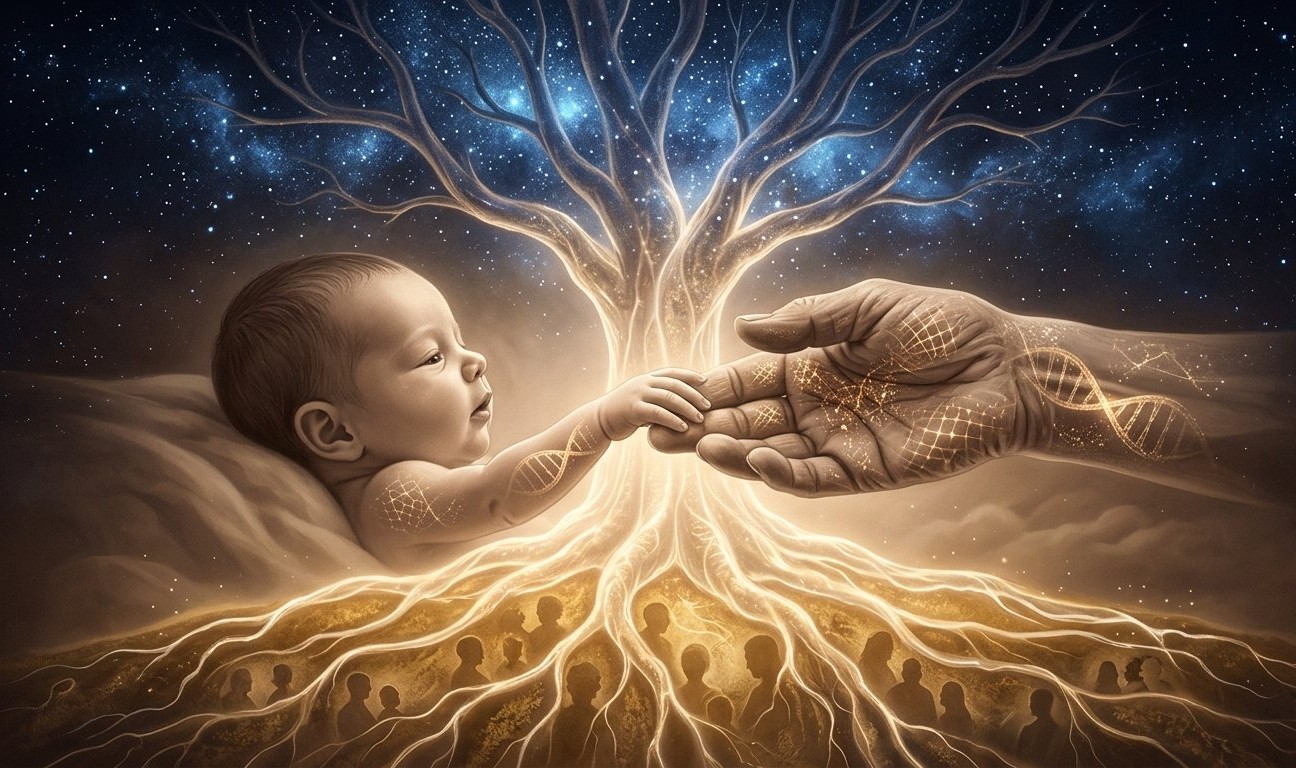
This is the poetry of Kshira-Dadhi Nyaya, which speaks to the step-by-step, irreversible metamorphosis of our tissues. Nourishment is not static; it is a continuous evolution. In this process, nutrients exist first as asthayi—a fluid, temporary nutritive precursor brimming with potential—before gracefully maturing into sthayi, the stable, resilient architecture of our permanent tissue. Like milk turning to curd, and curd turning to butter, our food undergoes a profound series of elemental shifts to become the literal substance of our flesh and bone.
Together, these three timeless analogies remind us that the true value of what we consume cannot be measured merely by the cold numbers on a nutrition label. A food's true power lies in how beautifully it is digested, how freely it flows through our internal pathways, and how seamlessly it is welcomed into the body's living processes.
Nourishment, therefore, is never a one-size-fits-all formula. It is an intimate, deeply personalized practice. By aligning our plates with our unique constitution, our digestive strength, the seasons, and our environment, cooking and eating cease to be mundane chores. They elevate into a daily ritual of devotion—a conscious act of sacred alchemy where the world around us gently becomes us.
*PM