Nourishment whispers of a reality far deeper than the fleeting hush brought to a restless appetite. While a simple meal may quiet the body's immediate clamour, it often offers little to the sacred temple of the physical form. What the modern world labels "empty calories" provides but a transient spark- a momentary flame that leaves us hollow, devoid of the essential essences that sustain life. True nourishment invites us to cross a deeper threshold and ponder a vital truth: How does the food we receive truly cultivate the inner vitality with which we live, think, create, and weave our unique threads into the grand tapestry of existence?
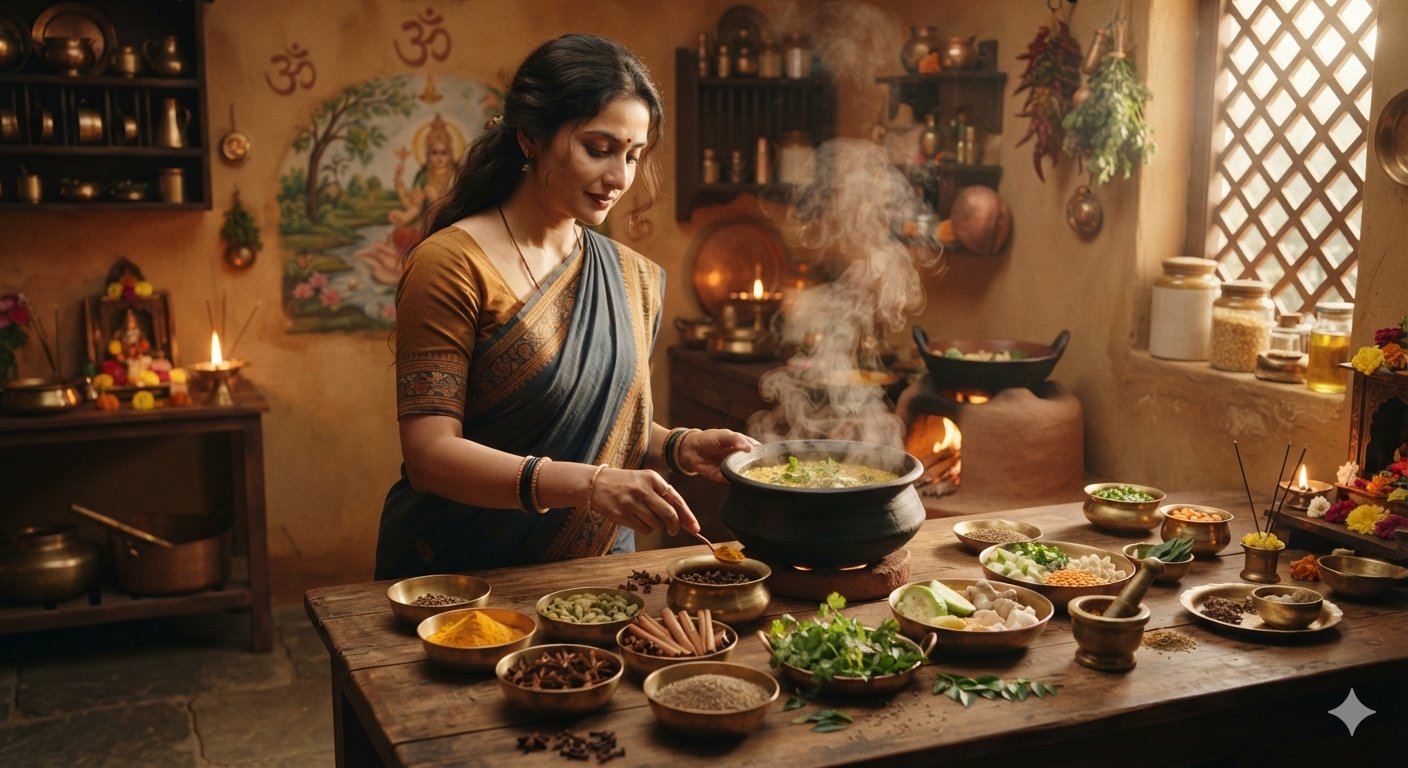
The ancient wisdom of Bharata views sustenance not as mere fuel for a machine, but through a luminous understanding of life itself. In days of old, cooking was a sacred, mindful dance- a quiet meditation where the chef focused intently on the harmony between nature's gifts, intentional preparation, the fires of digestion, and the consumer's unique spirit. In this philosophy, flavour was profoundly celebrated, yet the ultimate art lay in tuning the essence of the meal to the exact needs of the soul receiving it. The kitchen, then, becomes a living sanctuary where keen observation, timeless cultural memory, and quiet acts of everyday devotion converge.
At the heart of this alchemy lies deha prakriti—the recognition of an individual’s unique constitution, mapped through the delicate, poetic interplay of vāta, pitta, and kapha. These three doshas are not literal, material weights within the flesh, nor do they mirror the rigid terms of modern biology; rather, they form a lyrical framework for understanding the body's subtle currents and natural inclinations. To embrace this holistic vision is to realize that true harmony demands an intimate reverence for individual differences, casting aside the illusion of a one-size-fits-all world.
The Poetry of Rasa
The transformation of ingredients is a ritual of equal, if not sacred importance. A nourishing meal is never merely the sterile sum of its raw components; the precise alchemy of its preparation shapes its texture, its deeper resonance, and the ease with which the body assimilates its gifts. Indian culinary philosophy treasures rasa—taste—treating the sensory experience of eating not as a passing indulgence, but as a profound dialogue between the food’s intrinsic qualities and the individual’s inner state. It beautifully envisions food as something deeply intertwined with our physical, emotional, and spiritual landscape.
Through this lens, the act of dining elevates into a ritual of mindful attention, focusing upon:
· The true, unhurried nature of our hunger
· The quiet, immediate whispers of the body
· The subtle rhythms food weaves into our daily lives
· The sacred grace of the space in which a meal is shared
These timeless principles offer a thoughtful path toward intentional living, harmonizing the body's internal currents while effortlessly fulfilling its material needs. Where modern science measures sustenance by the cold numbers of energy, protein, fats, and fiber—often forgetting the spirit of the source—the enduring invitation of Bharata’s wisdom is to approach the plate with discernment and profound care. A single meal can hold the warmth of hospitality, the sweetness of memory, the joy of pleasure, and the foundation of life. Cooking, when understood this way, transforms into an everyday commitment to a more vibrant, luminous existence.
*PM