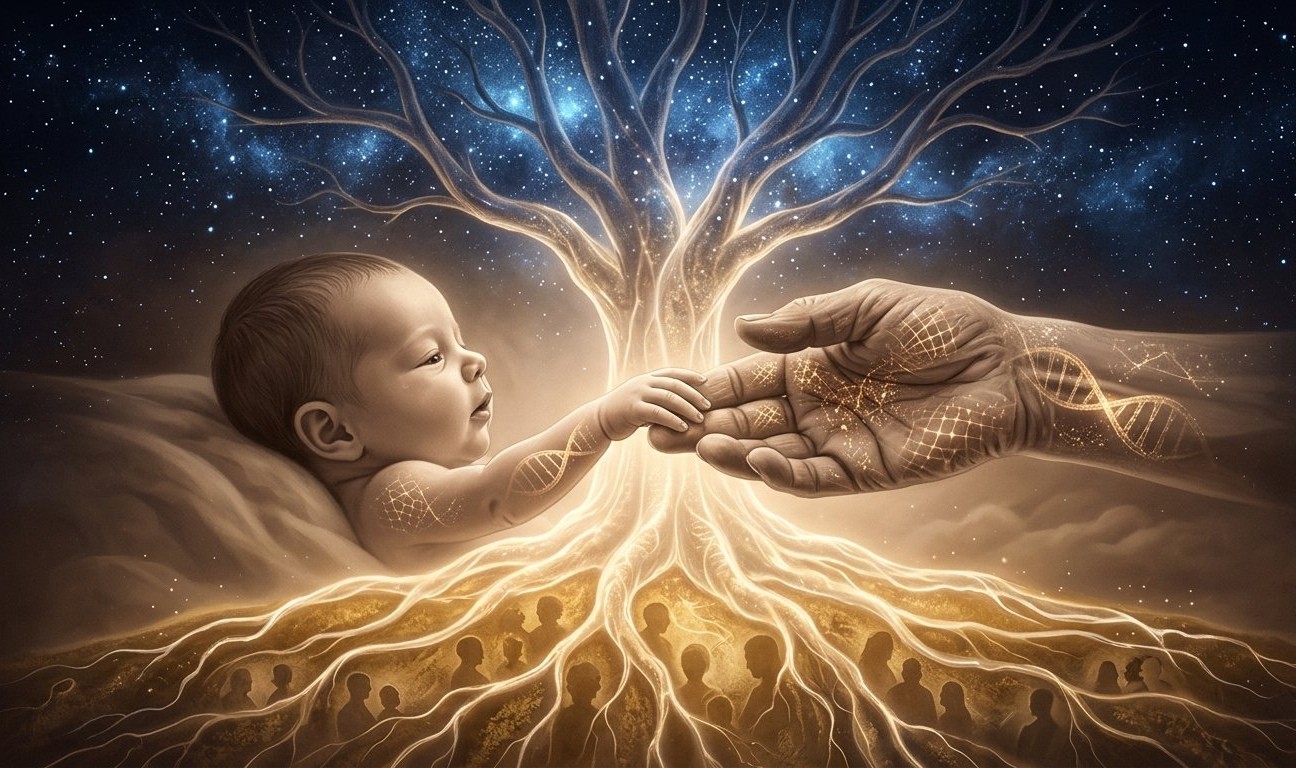
Chaos, disruption, and the sudden arrival of a "new normal" are not unique to the modern era. Change is the only true constant in human history. Whether we welcome it or not, we will inevitably encounter unpredictable currents that challenge our financial stability, our mental resilience, and the health of our closest relationships.
When the external world turns turbulent, our default survival mechanism is to shrink back, brace for impact, and operate entirely out of fear.
But the ancient traditions of Bhārata offer a radical alternative. They remind us that we do not have to wait for the storm to pass to experience joy. Instead, they invite us to practice Nityotsava- the perpetual, daily festivity of simply being alive.
To understand how joy can coexist with chaos, we must look to the natural architecture of the universe, or Prakriti.
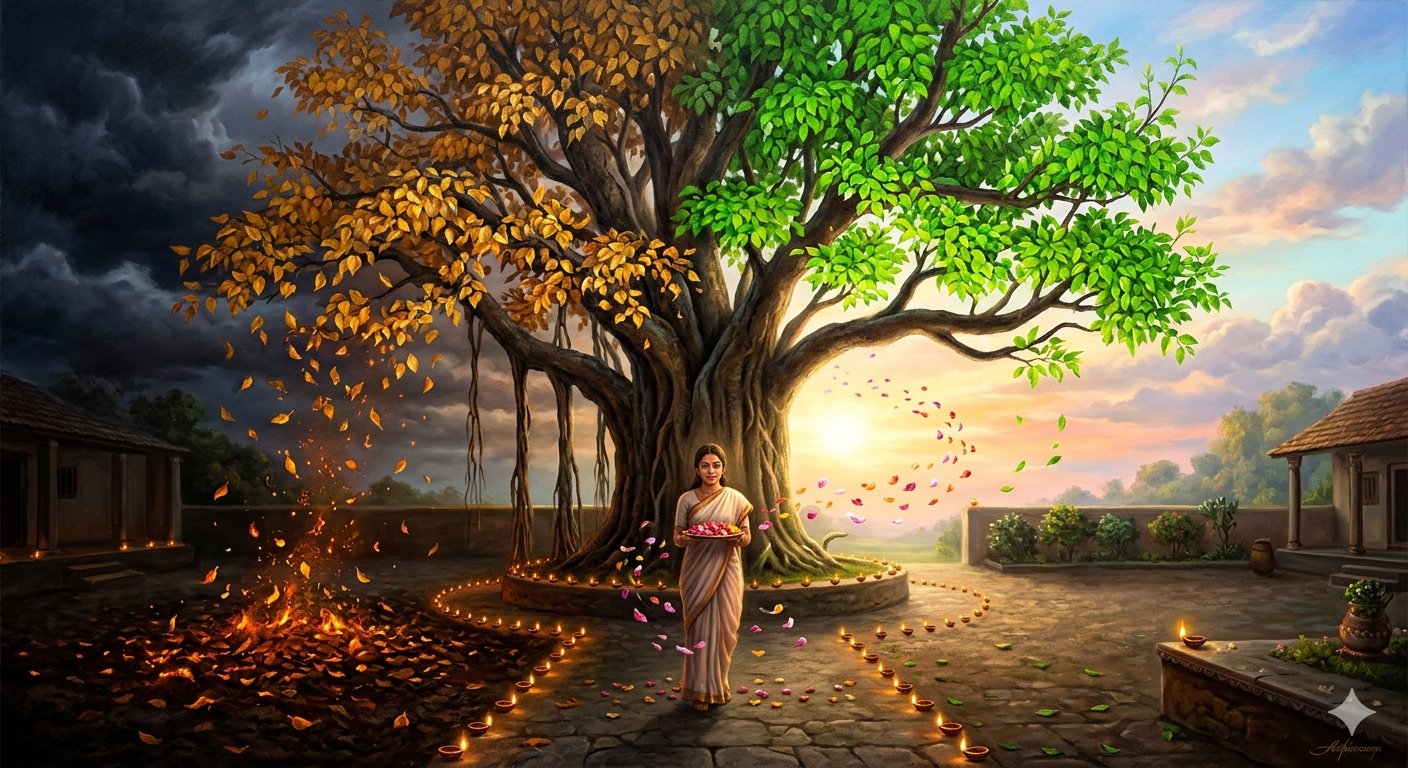
Consider the life of a great tree. As it expands its branches, new leaves continuously emerge to taste the sunlight. Simultaneously, older leaves shrivel, wither, and gracefully fall away. Crucially, those falling leaves do not represent a failure of the tree; they have already fulfilled their purpose of nurturing the trunk, and even in their decay, they enrich the soil to feed the new growth. This means, the process of shredding involves honouring past losses, allowing old habits and forms and biases to go while finding ways for soil enrichment. Then comes the renewal that paves way to welcoming fresh growth, adapting to new normal and expanding understanding, experience and consciousness.
Continuity explicitly unfolds through change. What falls away in our lives such as outdated routines, past certainties, or old chapters is actively participating in sustaining what is trying to grow within us.
Being alive is inherently frictional. There will always be bills to pay, grief to accommodate, uncertainties to map, and exhausting emotional labor to invest into our human connections.
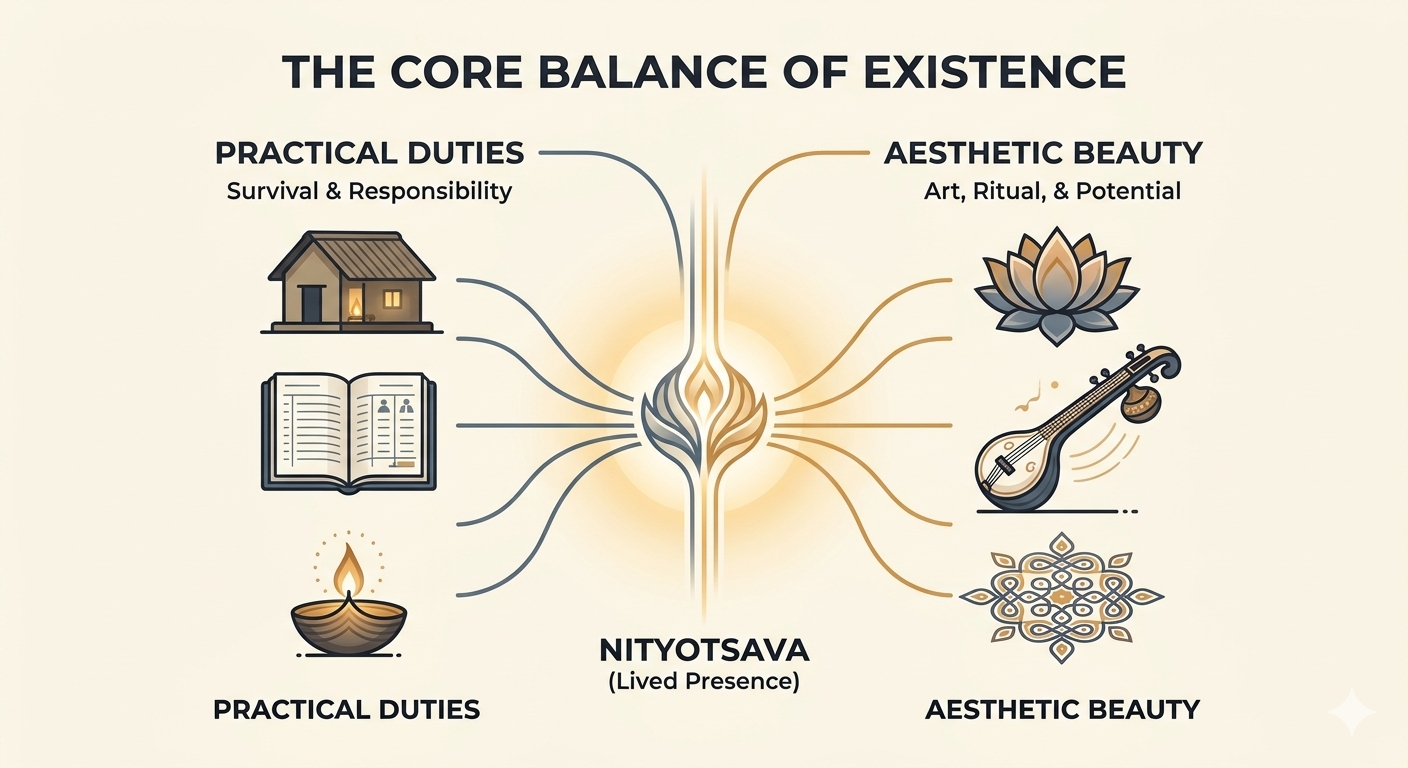
However, Nityotsava asserts that making a living and making sense of life are deeply connected. One component of this is practical duties that deals with survival and responsibility. The other is cultivating aesthetic enrichment in which knowledge of art, ritual and potential etc. are addressed.
We do not need to pause our practical responsibilities to seek beauty, fulfillment, and aesthetic grace. True alignment means executing your daily duties passionately while maintaining a spacious, luminous awareness that can find awe in a single breath, a shared meal, or a quiet sunset. This is the essence of ancestral adaptability: turning friction into a catalyst for inner expansion.
If you peel back the ethnocultural layers of India’s vast spiritual landscape, you will find that its countless observances, daily rituals, and seasonal festivities are not empty superstitions. They are meticulous psychological structures designed to anchor the human mind.
The acts of preparing a space, gathering with intent, remembering our lineage, making simple offerings, and celebrating are deliberate anchor points. They strip away the illusion of isolated panic and weave the individual back into a grand, collective continuity.
Through these shared spaces, our personal grief is acknowledged, held, and transformed into a shared human experience. The individual gives their unique energy to the community, and in return, the collective provides a safe, sacred harbor where the individual can continue to heal and grow.
Nityotsava is not an escape from reality; it is a fierce embrace of the totality of life. It is the recognition that while pain and uncertainty are inevitable, our participation in beauty is an active choice.
By anchoring your days in this sacred framework, you stop treating life as a series of fires to put out. You step into the world as a vibrant participant in an ongoing cosmic dance, ensuring that even amidst global chaos, your immediate existence carries a beautiful, unshakeable festive grace.
*PM/SS