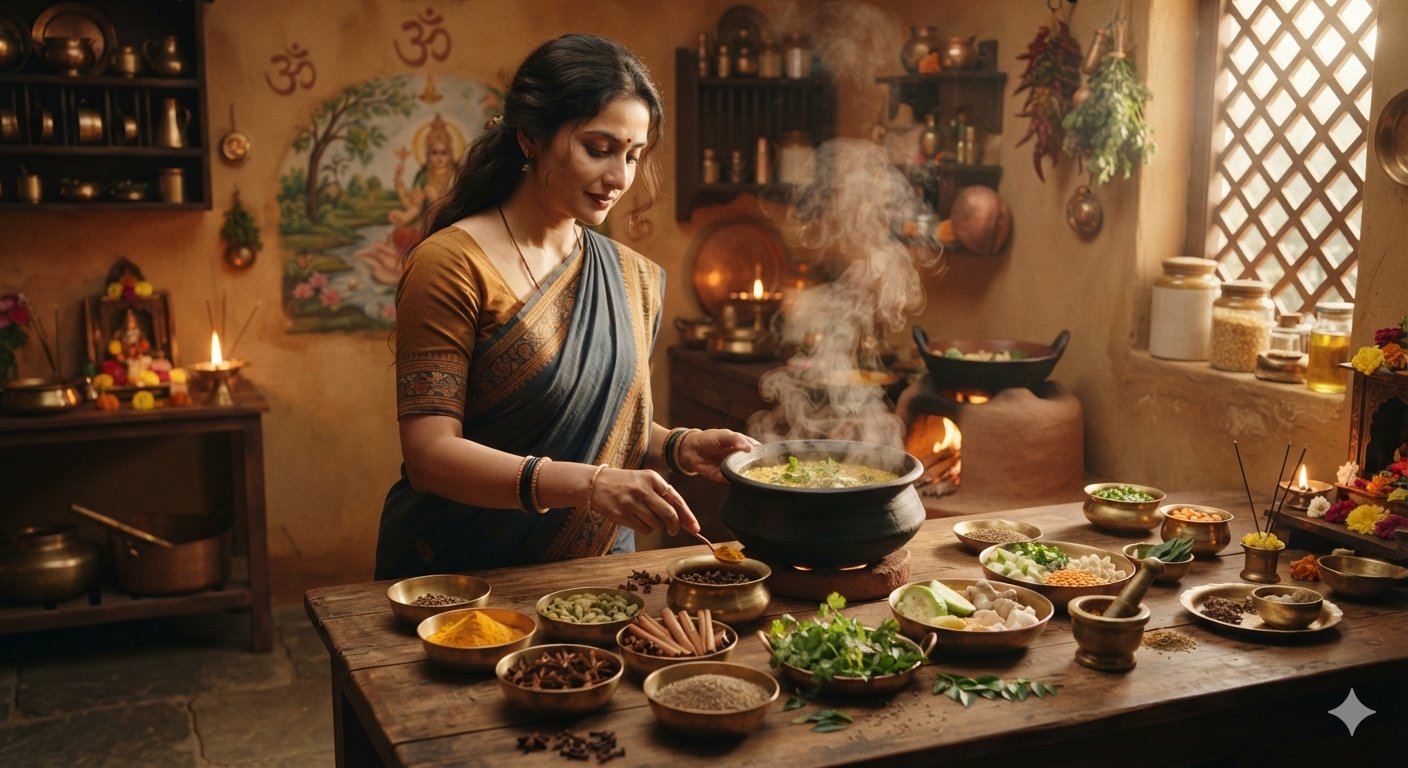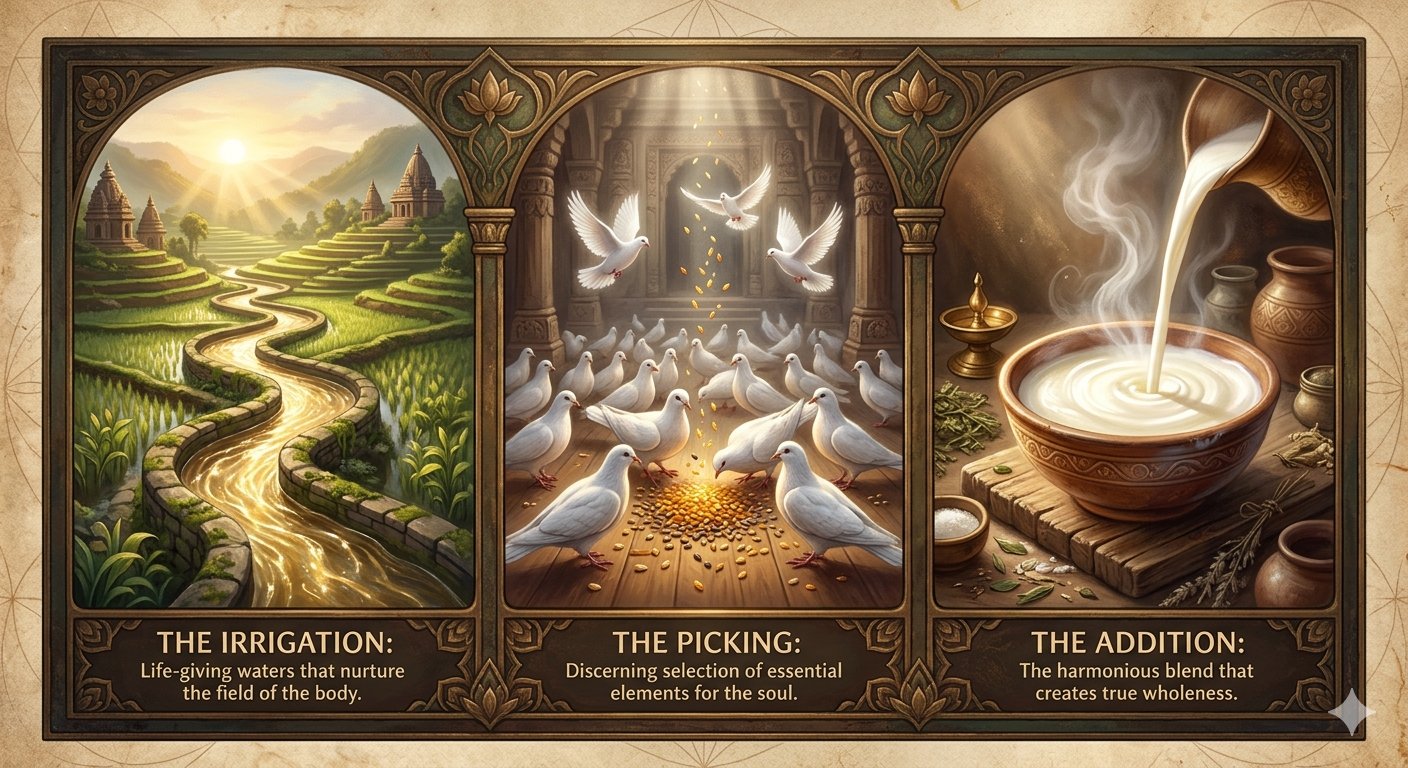
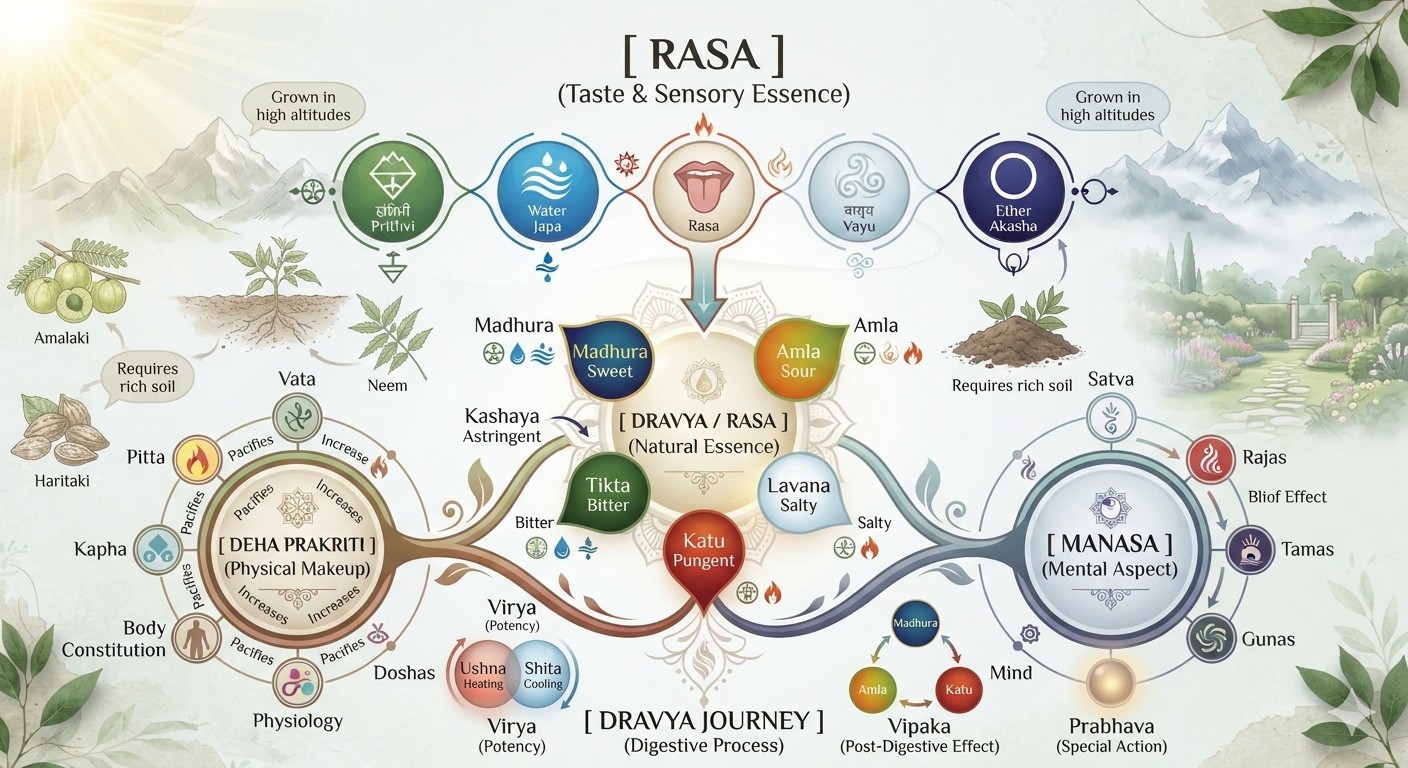
Taste is so much more than a fleeting moment on the tongue. It brings together the pure pleasure of eating, the rich sensory impressions received through our taste buds, and the profound ways in which an everyday sensation connects us with life itself. In the broader experiential sense, rasa encompasses the interplay between our senses and our state of being. It is beautifully expressed in the care of preparing and sharing food, the communication of the feelings it evokes, and the carrying of familiar culinary experiences across generations.
Through this lens, taste becomes a vibrant encounter between the absolute essence of a substance and the precise way we perceive, savor, and share it.
The Science of the Six Tastes (Shad Rasa)
In its distinct gustatory sense, rasa is the perception of taste through the Rasana Indriya—the faculty of taste linked directly to the jihvā, or tongue. Ancient Indian healing traditions map out this sensory landscape through shad rasa, the six essential tastes: Madhura (Sweet), Amla (Sour), Lavana (Salty), Katu (Pungent), Tikta (Bitter), and Kashaya (Astringent)
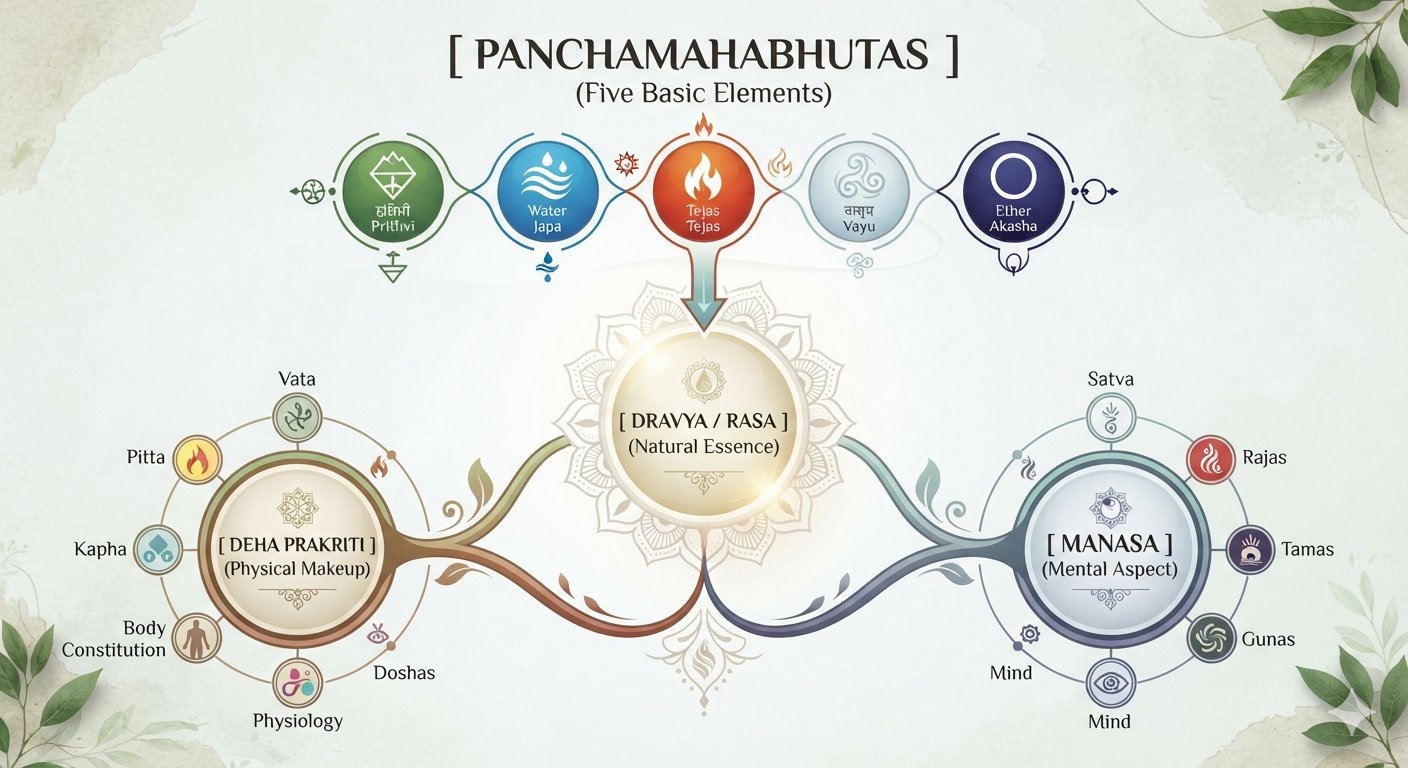
In these time-honored systems, the natural essence (rasa) of any substance (dravya) is seen as a direct reflection of the panchamahabhutas- the five basic elements of nature. This elemental essence helps us understand the structure, qualities, and actions of everything we consume.
Maintaining the balance of rasa is thought to help maintain our overall well-being. Its importance goes far beyond our passing thoughts, our taste buds, or the simple pleasure of enjoying something tasty. By paying deep attention, we can fully engage with this experience and see how it fits into our daily lives, connecting directly with our deha prakriti (physical makeup) and manasa (the mental aspect).
The question then naturally becomes: how can pleasure be experienced with the suitability and care of the whole person?
Rasa absolutely involves pleasure—but it is a pleasure balanced with suitability and an acknowledgement of subtle natural laws.
The immediate chemical zing of an aerated energy drink that we hurriedly guzzle offers one type of sharp sensory encounter. On the other hand, a thoughtful engagement with the six rasas invites a much wider consideration of how we cultivate our inner states. It challenges us to approach pleasure in ways that are truly conducive to long-term well-being.
Within this traditional framework, different rasas are understood to pacify or aggravate particular doshas (our constitutional bio-energies). To truly understand what we eat, we must look at a substance's entire digestive journey:
Virya: The cooling or heating potency of a substance, considered alongside its immediate taste.
Vipaka: The post-digestive effect, which carries long-term implications for our body's nourishment and elimination.
Prabhava: A distinctive, special action inherent to a substance that cannot be adequately explained by its other described properties alone.
Gunas: The inherent qualities or physical attributes of the substance.
In the wisdom of our venerable Indic healing traditions, rasa is the tanmatra (the delicate sensory essence) linked to taste. This perspective beckons us to deeply savor and cherish the experience of eating, while staying acutely mindful of the attributes, properties, and subtle aspects of nourishment that it grants us.
What sits atop our tongues also bears the indelible effects of its origin, cultivation, care, and preparation. Recognising this journey helps us appreciate the exact conditions that contribute to the food we consume.
Consider the environment in which our food grows:
The Environment: Berries grown in a cooled, artificial indoor setting—even if successfully cultivated there—may differ drastically in taste, composition, and effect from those grown in their native, wild Himalayan surroundings.
The Soil and Light: Likewise, chilies or coriander nurtured in a home garden or small containers offer a completely different experience from the same variety grown elsewhere.
Even when using viable seeds of the exact same variety; the unique soil, light, water, climate, cultivation, harvesting, and storage all heavily contribute to the final outcome. Ancient Indian wisdom lineages espouse that this is so because the natural essence, or rasa, of any dravya (whether food or medicine) undergoes its own unique “localisation dynamics.” This localized elemental interaction directly dictates and alters the final rasa.
Attending to rasa brings these complex, cosmic relationships right into our everyday lives. It seamlessly connects the simple pleasure of tasting with the conscious, intentional care through which true nourishment becomes possible.
*PM